Order Beyond a Single Basket
The most revealing meal is rarely the largest order. Give each preparation enough space, warmth and attention to say something distinct.
01 / Establish the boundaries first
Before choosing flavours, establish the practical shape of the meal. Ask how many pieces come in a portion, whether orders can arrive in rounds and which dishes take longer. A basket of small dumplings and a plate of substantial filled dough can represent very different amounts of food. Piece count is useful only alongside size and the rest of the menu.
Tell the staff about allergies and dietary requirements before ordering. “Vegetable” does not establish that a dish is vegan, and a pale wrapper does not establish that it is wheat-free. Stocks, dried seafood, egg, dairy and condiments may matter as much as the visible filling. If cross-contact is a concern, ask about shared cooking water, steamers, utensils and pans.
Set a comfortable spending limit using the restaurant’s current menu. We do not publish a universal tasting budget because portion sizes, service charges and local prices vary. Check what is included and leave room for a vegetable dish, soup or other accompaniment if that is how the restaurant’s food is intended to be eaten.
02 / Choose a baseline, not a bland dish
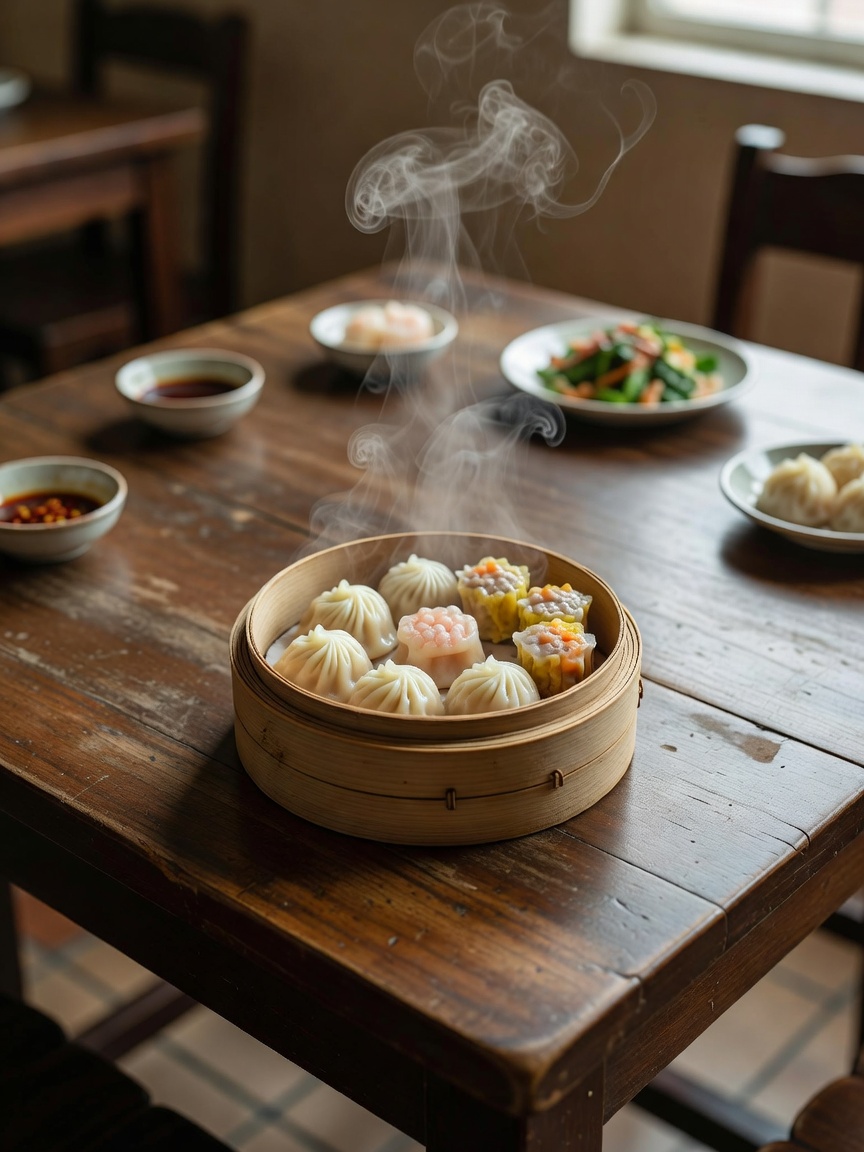
A baseline is simply the first preparation you attend to closely. It need not be mild, plain or presented as the restaurant’s most important dish. Choose something that expresses the house’s focus and ask how it is usually accompanied. A sharply seasoned filling can be a perfectly useful starting point if you understand that intensity as part of the dish.
Where appropriate, taste a little before adding extra sauce. Notice the wrapper’s resistance, the filling’s texture and the balance of salt, fat and aroma. Then try a small amount of the suggested condiment. The point is not to prove that good food needs no seasoning; many dishes are conceived with their accompaniments.
If the preparation contains very hot broth, prioritise cooling and careful handling over an idealised first bite. Use the utensils provided and ask for help if needed. Table customs are invitations to understand a dish, not tests that diners must pass without explanation.
03 / Change one thing at a time
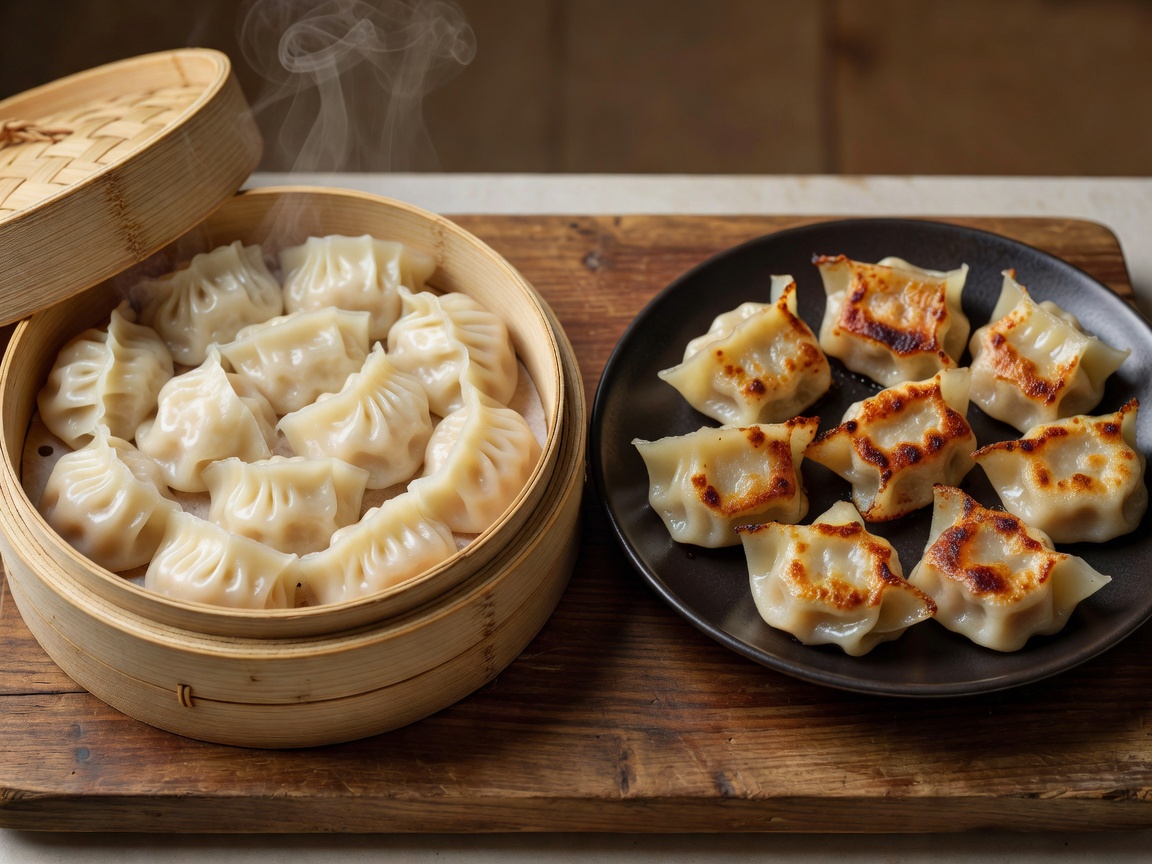
The clearest contrast usually changes one major feature. Compare a steamed and pan-fried preparation with similar fillings, or two fillings wrapped and cooked in the same way. If you change the dough, filling, sauce and cooking method at once, the result may still be delicious, but it becomes harder to explain what produced the difference.
This is a flexible dining strategy, not a controlled laboratory exercise. A regional specialist may not offer parallel versions, and a kitchen should not need to invent one for you. Follow the actual menu. Two dishes can reveal a useful contrast in scale, texture or serving custom even when they are not directly comparable.
For two diners, an opening round of two or three small portions may work if portion sizes allow. For a larger group, check whether everyone can taste each selection without awkward splitting. Ask before cutting soup-filled dumplings apart: spilling their contents can remove the very quality you hoped to compare.
04 / Let the meal breathe
Strong chilli oil, vinegar, raw garlic and sweet sauces can linger. Water and a pause may help you notice the next dish more clearly; a drink does not magically reset the palate. Use condiments in small amounts at first, then add more according to the dish and your preference. There is no prize for keeping your plate austere.
Temperature creates its own sequence. A crisp base often loses definition as it sits, while a dangerously hot filling needs patience. If everything arrives together, ask which preparation is best eaten first. Staff may know the kitchen’s timing better than any general rule about serving mild flavours before strong ones.
Make brief notes only if they improve the meal. A few words such as “elastic edge,” “fragrant broth” or “crisp, not oily” are more useful than assigning a universal score. If taking photographs, avoid blocking service or leaving fragile dishes to cool while you rearrange the table.
05 / Finish with intention
Before adding another round, pause and check appetite. Returning to one favourite can be more satisfying than completing a checklist. A sweet preparation may offer an interesting finish when it belongs to the menu, but no dumpling meal requires dessert to be complete.
End by asking what you learned about this particular house: a wrapper style, a regional seasoning, a useful accompaniment or a way of handling the food. The best tasting sequence leaves you with sharper language and a reason to return, rather than a claim to have understood an entire cuisine in one sitting.
Read a focused house