Recognising a Focused Dumpling Menu
A specialist house has a point of view. Read the connection between its names, preparations and service rather than looking for a single badge of quality.
Specificity is more useful than spectacle
A menu that names a regional preparation gives you something concrete to explore. It may distinguish a boiled dumpling from a steamed bun, describe a particular filling or explain an accompaniment. That precision is useful because it sets expectations you can compare with the meal. Vague promises of “the world’s best dumplings” offer much less information.
A short menu can suggest concentration, but length alone proves little. A small kitchen may execute a narrow selection poorly; an experienced team may handle a broader regional repertoire well. Look for relationships between the dishes: shared doughs, distinct cooking methods, a coherent set of fillings or sides that make sense with the main preparation.
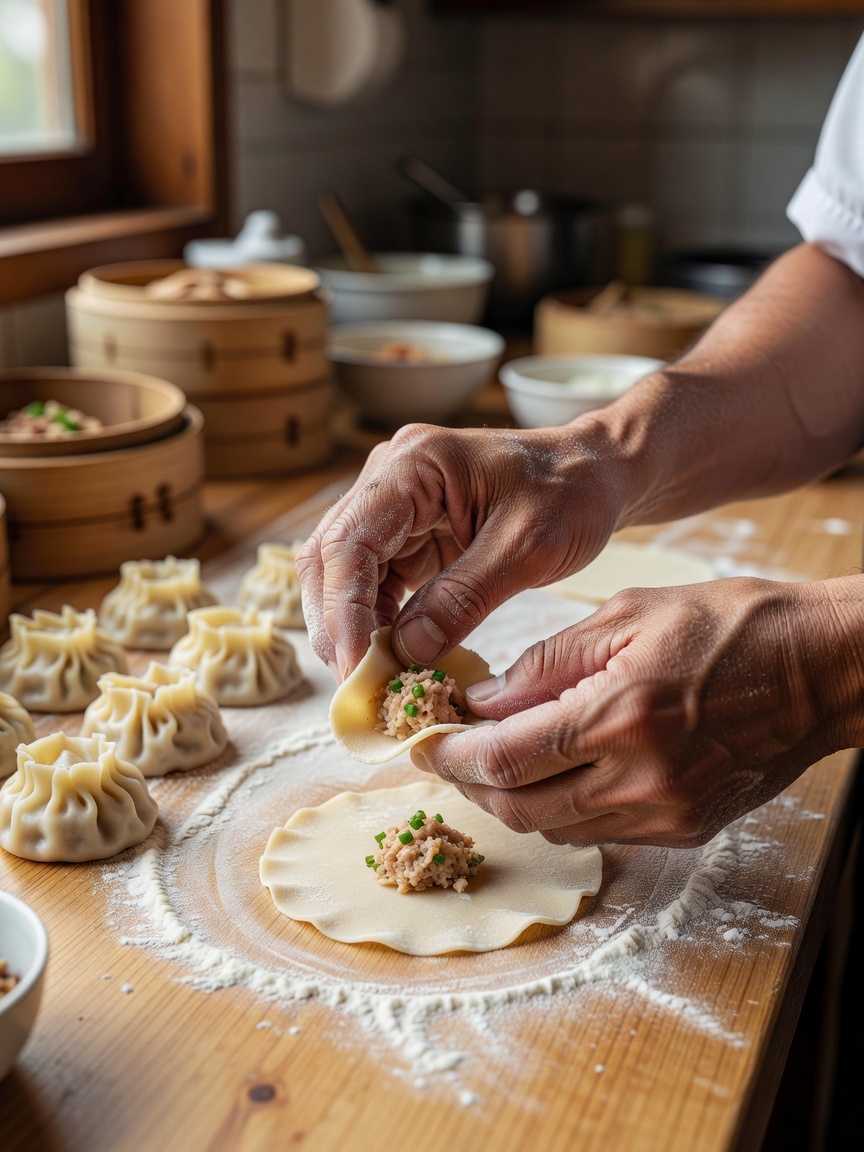
Open kitchens and visible folding benches can reveal labour and technique. They can also be part of a restaurant’s presentation. Watch with interest, but do not confuse a good view with complete knowledge of sourcing, storage or cooking. Much of the most important work happens outside a diner’s line of sight.
Ask questions the kitchen can answer
Useful questions are small and concrete. “Which dish best represents your regional focus?” invites explanation. “How does this wrapper differ from the one in the next dish?” helps you notice construction. “Which condiment goes with this preparation?” connects seasoning to context. None requires a server to deliver a lecture while managing a busy room.
Dietary questions need more direct language. Ask about ingredients and cross-contact, not whether a dish is “clean” or “safe for everyone.” A responsible answer may include limits: the kitchen might use shared equipment or be unable to accommodate a particular allergy. Clear boundaries are more reassuring than an immediate promise unsupported by detail.
Language differences should not be mistaken for lack of knowledge. A written menu, an ingredient list or a brief exchange may communicate enough. Service style also varies. Warmth can appear as careful timing, a practical utensil or a clear warning about hot broth, rather than a long conversation at the table.
Read the food across a whole serving
One attractive dumpling is not the entire dish. Notice whether the serving is reasonably consistent, whether seams hold and whether the wrapper suits the filling. Handmade food can show small differences without being careless. Perfectly identical shapes, meanwhile, do not establish poor craft; shaping tools and machines can support a careful kitchen.
Think about filling distribution rather than maximum stuffing. Too much filling can strain a wrapper, while an intentionally dough-forward preparation may rely on the pleasure of its skin. Juiciness should also be understood in context. A dumpling designed around broth has a different target from one filled with a relatively dry mixture of potato or cheese.
Frozen preparation is not a verdict by itself. Freezing, storage and cooking can be managed well or badly, and some restaurants prepare batches to preserve consistency and control service. If the menu makes a specific claim such as “folded to order,” that claim can be evaluated separately from whether the food tastes good.
Timing is part of the craft
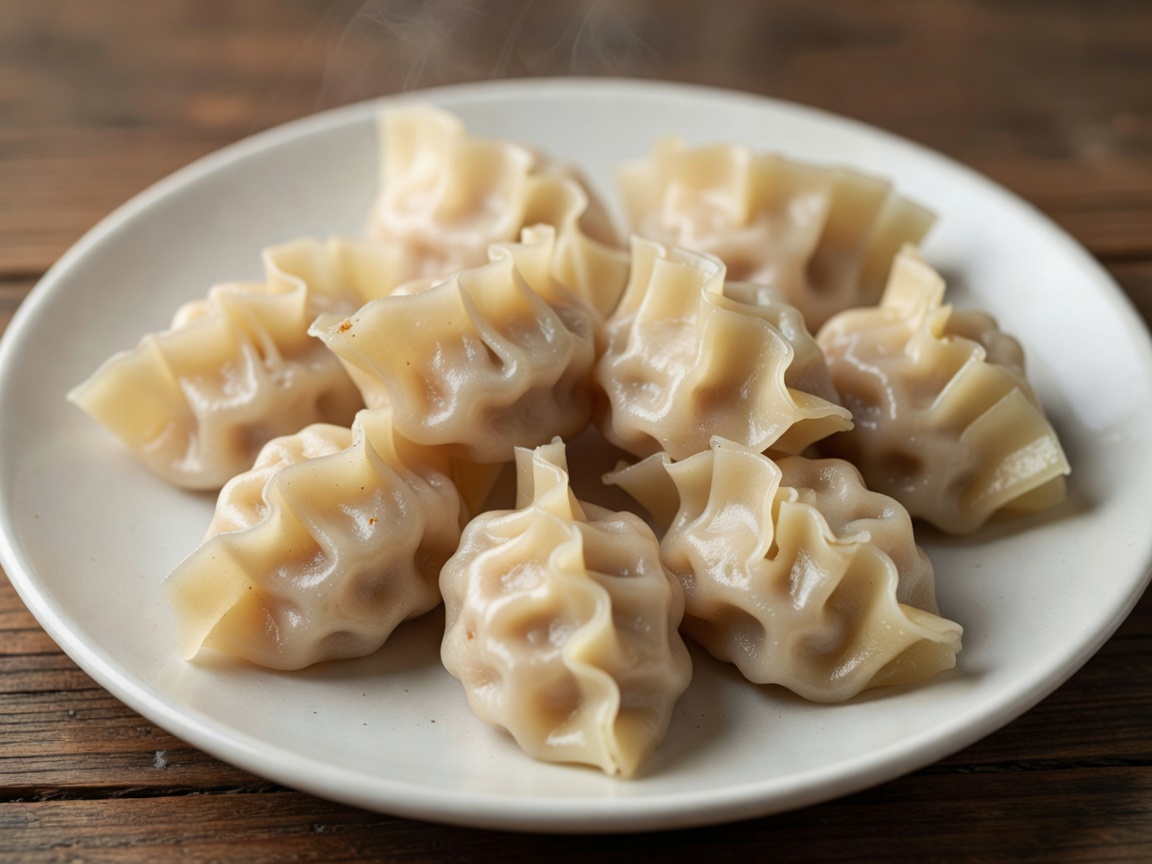
A focused house understands how its food changes after cooking. Delicate steamed wrappers can stick or tear as they sit. Crisp bases soften under trapped moisture. Soup-filled dumplings need careful handling but should not arrive abandoned to cool. Good pacing helps the diner experience the intended contrast without rushing dangerously hot food.
Some specialist restaurants work through rapid, continuous service rather than a formal tasting sequence. Others send everything when ready. Ask how ordering works before requesting courses. Respecting the house’s normal rhythm often produces a better meal than imposing a slow tasting format on a kitchen designed for quick turnover.
Practical details count too: clear portion sizes, usable utensils, understandable prices and accurate descriptions. These are not glamorous, but they make exploration easier. A restaurant can show serious regional focus in a modest room with efficient service, just as an elaborate dining room can deliver an unfocused menu.
Leave authenticity scores at the door
Do not judge a restaurant’s cultural legitimacy by the appearance of staff, the language spoken by other diners or decorative objects in the room. Those shortcuts turn people into evidence for an outsider’s expectations. Regional knowledge can travel, and diaspora kitchens can express both continuity and deliberate change.
Instead, assess what the restaurant actually promises. Does it explain its focus accurately? Do the preparations support that focus? Are ingredients and adaptations described honestly? A new filling is not automatically disrespectful, and an old recipe is not automatically well executed.
After the meal, describe specific experiences rather than issuing a verdict on a whole tradition. You might remember a supple seam, a sharp accompaniment, thoughtful pacing or a clear answer about ingredients. Those details help another diner make a decision and give the kitchen credit for the work it actually does.
Share a precise observation