What Heat Does to Dough
A wrapper is an active part of the dish. Water, steam and direct heat give it different textures, and those textures tell you how to approach the plate.
Begin with the surface
Before reaching for a condiment, notice whether the dumpling looks matte, glossy, translucent or browned. Those observations help you form questions, not verdicts. A thicker wrapper may be deliberately robust enough to hold a generous filling. A delicate starch skin may be designed for a different sort of tenderness. Neither should be judged against an imaginary ideal of maximum thinness.
Dough composition matters as much as the cooking method. Wheat flour can develop a resilient structure; starch blends can produce a more translucent or gently elastic skin. Added water, mixing and resting all affect the result. From a dining table you cannot reliably reconstruct a recipe, but you can describe whether the edge feels supple, tough, fragile or pleasantly chewy.
Look at the contact points too. A dumpling sitting in condensation will soften differently from one lifted straight from a pan. The few minutes between cooking and eating are part of the texture you experience, which is why good service timing matters alongside skilled preparation.
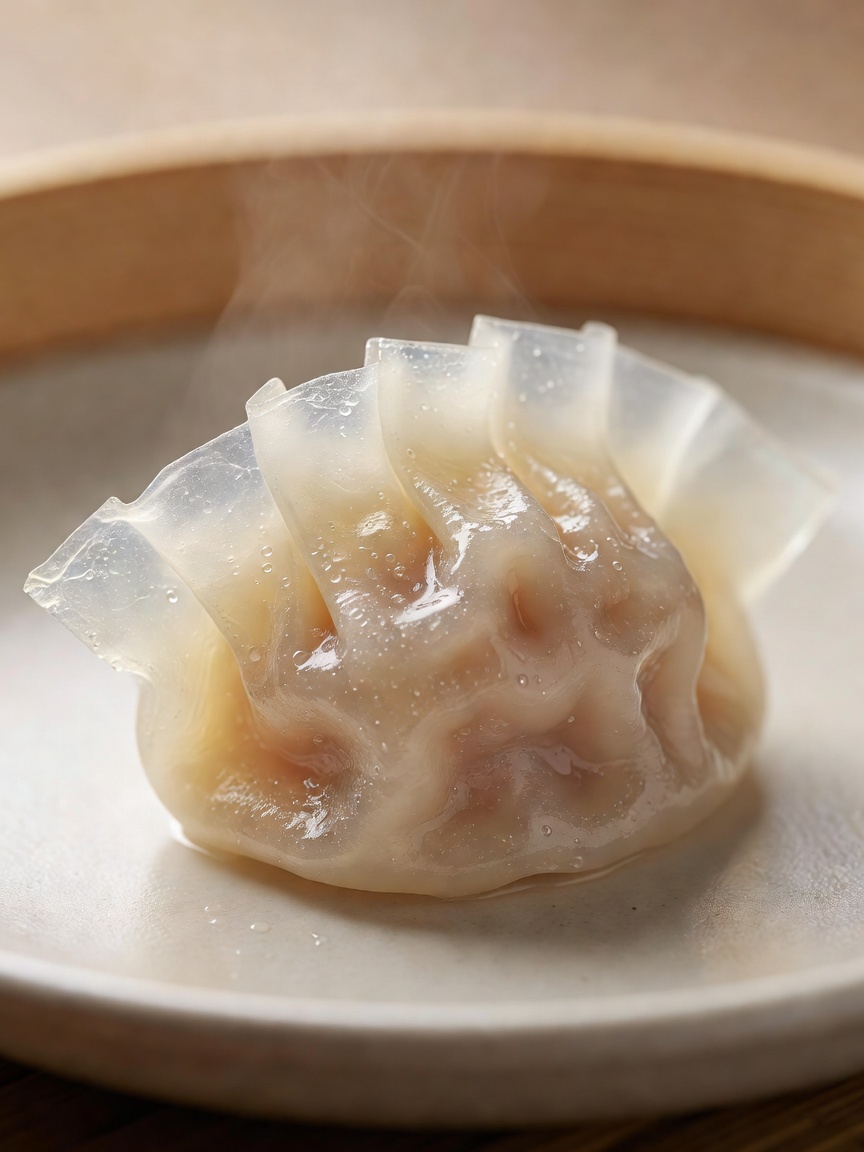
Steam keeps the wrapper out of the water
Steaming surrounds a dumpling with moist heat without immersing it. A well-suited wrapper can stay tender while supporting the filling, provided the dumplings are spaced, handled and timed appropriately. Bamboo baskets are one familiar serving vessel, but the vessel itself is not a guarantee of quality or evidence that every item was cooked to order.
In soup-filled xiaolongbao, broth commonly comes from a gelled stock incorporated into the filling and liquefied during cooking. The wrapper must contain that liquid while remaining pleasant to eat. A broken skin may spill the broth before the dumpling reaches your spoon; a very thick skin may feel disproportionate. There is still regional and house variation in the intended balance.
Lift carefully and let fierce heat subside. Support a fragile dumpling with a spoon where appropriate, release steam cautiously and ask for guidance if the serving method is unfamiliar. Hot liquid can burn even when the outside feels manageable. Eating quickly to preserve texture is never more important than avoiding injury.
A crisp base is a separate layer
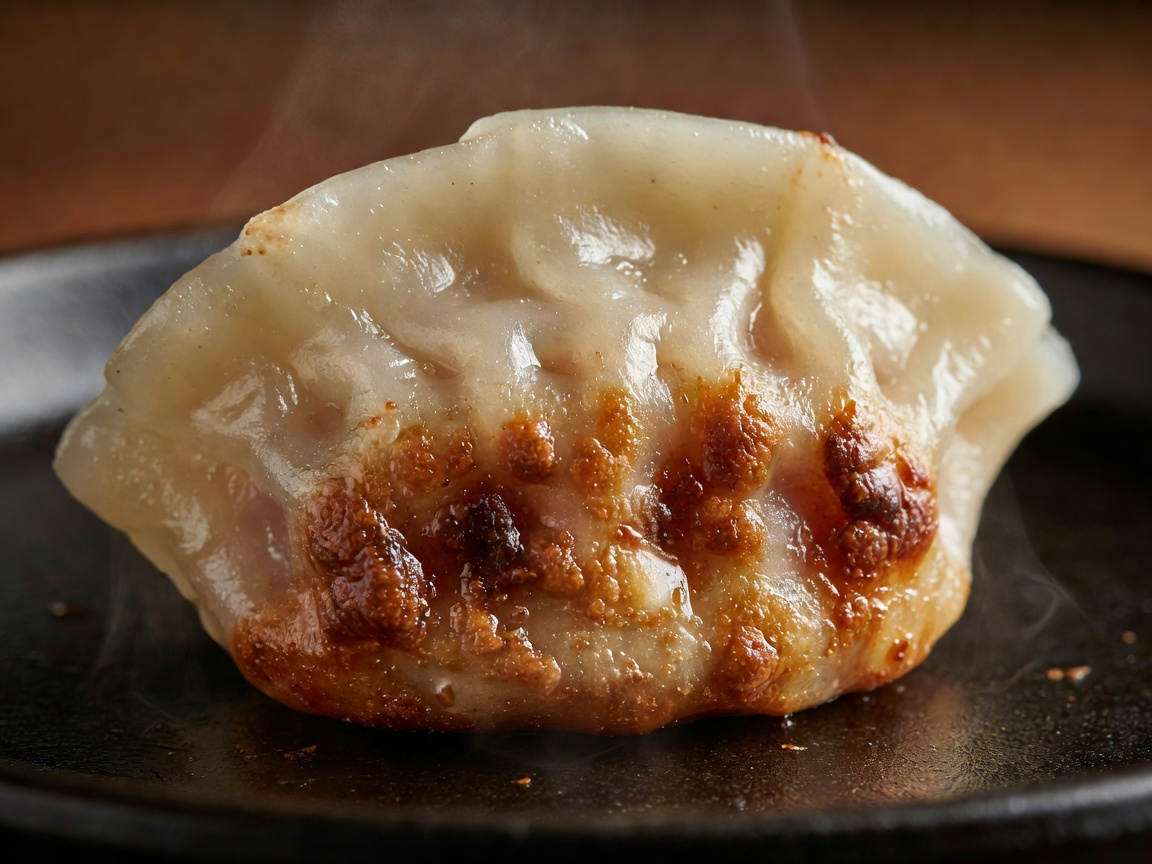
Many pan-fried dumplings combine frying and covered steaming. Direct contact builds colour on the base; added water and a lid help cook the upper wrapper and filling; evaporation allows the base to become crisp again. The exact sequence varies, so “pan-fried” does not mean the entire dumpling should be crunchy.
Japanese yaki-gyoza often make this contrast especially clear. Compare the browned underside with the softer top, then notice whether the filling remains juicy without overwhelming the wrapper. A flour- or starch-based skirt may form a lacy sheet between dumplings. It adds a texture of its own but does not automatically make the underlying cooking better.
Some preparations, including many versions of Shanghai shengjianbao, use a bun-like dough rather than the thin wrapper you might associate with gyoza. Their thicker structure changes the eating experience. Compare each dish with its own intention instead of assuming every browned dumpling should have the same ratio of crust to skin.
Simmering brings resilience into focus
Boiled or simmered dumplings are surrounded by moving water. A good wrapper must tolerate that movement and keep its filling enclosed. Boiled jiaozi, pierogi and khinkali use this broad method in different ways; the shared pot does not erase differences in dough, scale, filling or table customs.
Notice whether a dumpling holds its shape when lifted, whether the seam is much denser than the rest, and whether the surface feels slick in a pleasing way or seems waterlogged. These are sensory observations, not safety tests. You cannot confirm a safe internal cooking temperature from colour, steam or wrapper texture alone.
For a useful restaurant comparison, choose two preparations of a similar filling if the menu offers them. Taste each before adding strong condiments and note what changed: the chew, the aroma released on opening, the amount of surface oil or the way a sauce clings. Avoid asking a kitchen to remake dishes outside its normal methods just to complete an experiment.
- SteamedWatch tenderness and containment.
- Pan-friedCompare the base with the upper wrapper.
- SimmeredNotice resilience, seams and water absorption.
Then let the comparison become a meal again. Texture is a way into enjoyment, not a requirement to score every mouthful.
Build a tasting sequence